
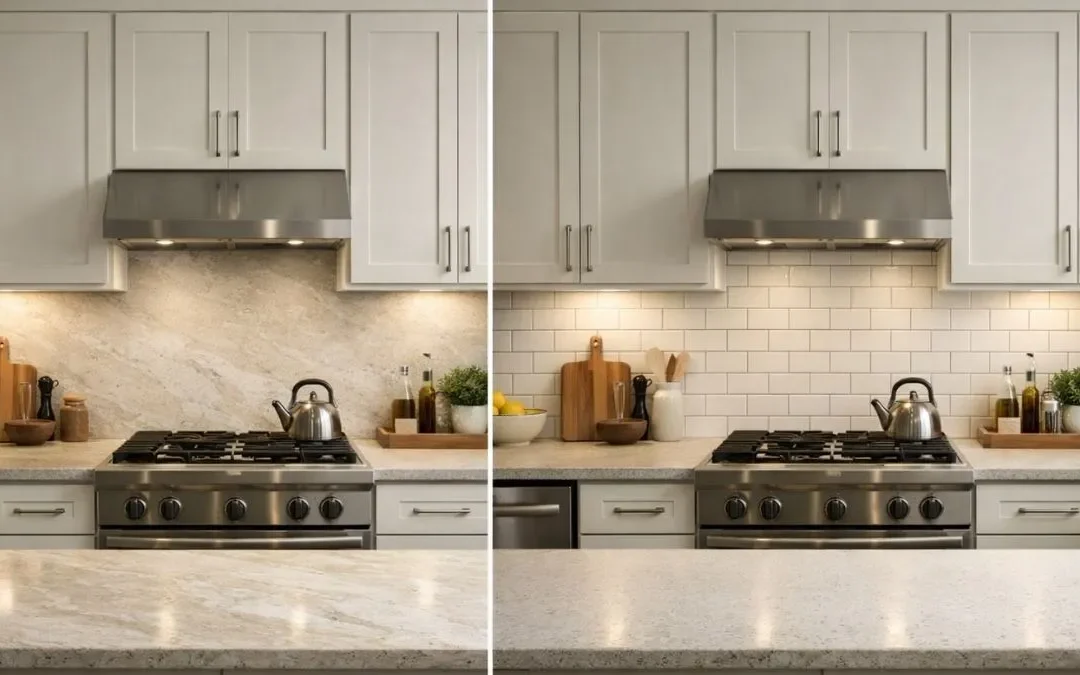
Kitchen remodeling trends in Chicago continue to evolve in 2026, and one design decision that homeowners increasingly ask about is whether to choose a slab backsplash or a traditional tile backsplash. While both options protect kitchen walls and enhance design, they differ significantly in appearance, maintenance, cost, and long-term value.
If you are planning a kitchen remodel in Chicago, understanding the real-world differences between slab backsplashes and tile backsplashes can help you make a confident decision that fits your lifestyle and your home.
What is a Slab Backsplash?
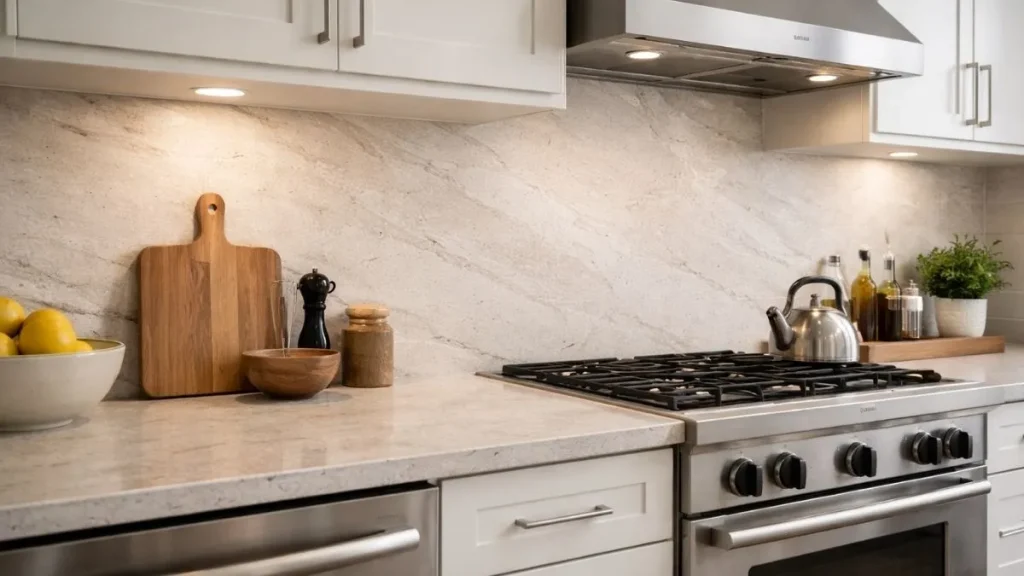
A slab backsplash is created using a single, continuous piece of material that runs from the countertop to the upper cabinets or even to the ceiling. In Chicago kitchen remodels, slab backsplashes are most commonly made from quartz, marble, granite, or large-format porcelain. Because there are no grout lines, the surface looks seamless and modern, which is why slab backsplashes have become popular in newer condos and high-end home renovations across the city.
Many homeowners choose a slab backsplash that matches their countertop, creating a clean, cohesive look that feels intentional and high-end. This style works especially well in Chicago kitchens where space is limited and visual continuity helps the room feel larger.
What Is a Traditional Tile Backsplash?
A traditional tile backsplash is made up of individual tiles installed with grout lines between them. This has long been the standard option in Chicago kitchens and remains widely used due to its flexibility in design and generally lower upfront cost. Subway tile, ceramic tile, porcelain tile, and mosaic patterns are all common choices in kitchen remodeling projects.
Tile backsplashes allow homeowners to introduce color, texture, or patterns into the kitchen. They are often chosen for partial kitchen remodels or refresh projects where cabinets and countertops are not being replaced.
Cost Differences for Slab vs Tile Backsplashes in Chicago
When comparing slab backsplash cost to tile backsplash cost in Chicago, slab installations are typically more expensive. Slab materials cost more upfront, and fabrication requires precise cutting and professional installation. However, installation is often faster because there is no grouting involved.
Tile backsplashes usually cost less initially, but labor can increase depending on tile size, layout complexity, and grout work. For homeowners completing a full kitchen remodel in Chicago, slab backsplashes are often viewed as a premium upgrade, while tile backsplashes remain a cost-effective and versatile option.
Maintenance and Cleaning Considerations
Maintenance is one of the biggest reasons Chicago homeowners choose slab backsplashes. Because slab backsplashes do not have grout lines, they are easier to clean and less likely to stain over time. This is especially important in kitchens that see heavy daily use.
Tile backsplashes require more ongoing maintenance. Grout lines can absorb grease and moisture, which means regular cleaning and occasional resealing are necessary. In busy households, this maintenance can become frustrating over time.
For homeowners who want a low-maintenance kitchen remodel in Chicago, slab backsplashes often provide a long-term advantage.
Design Impact in Chicago Kitchen Remodels
From a design perspective, slab backsplashes align closely with modern kitchen remodeling trends for 2026. The seamless surface creates a clean, contemporary look that pairs well with flat-panel cabinets, integrated appliances, and minimalist layouts.
Tile backsplashes continue to work well in traditional or transitional Chicago homes. They allow for creative expression and can complement shaker cabinets, older layouts, or vintage-inspired designs. In many Chicago two-flats and bungalows, tile backsplashes help preserve character while still updating the kitchen.
Resale Value: Which Option Performs Better in Chicago?
In competitive Chicago real estate markets, kitchens play a major role in buyer decisions. Slab backsplashes tend to signal a higher-end renovation and are often associated with newer or fully updated homes. Buyers frequently perceive slab backsplashes as a luxury feature, especially when paired with quartz countertops.
Tile backsplashes can still perform well for resale when they are neutral and professionally installed. While they may not carry the same luxury perception as slab backsplashes, they remain a safe and appealing choice for many buyers.
Choosing the Right Backsplash for Your Chicago Kitchen
A slab backsplash is often the right choice if you want a modern look, minimal maintenance, and strong resale appeal. It works best in full kitchen remodels where countertops, cabinets, and finishes are being updated together.
A tile backsplash may be a better option if you are working with a limited budget, prefer decorative detail, or are updating only part of your kitchen. Tile also makes sense when you want to introduce color or pattern without committing to a full renovation.
Final Thoughts on Slab vs Tile Backsplashes in Chicago
Both slab backsplashes and tile backsplashes can be excellent choices for a Chicago kitchen remodel. The best option depends on your budget, your design goals, and how you use your kitchen on a daily basis.
If you’re planning a kitchen remodel in Chicago and want expert guidance on choosing the right backsplash, the team at Budget Construction Company can provide a professional consultation, clear material recommendations, and a detailed estimate tailored to your home and budget.