
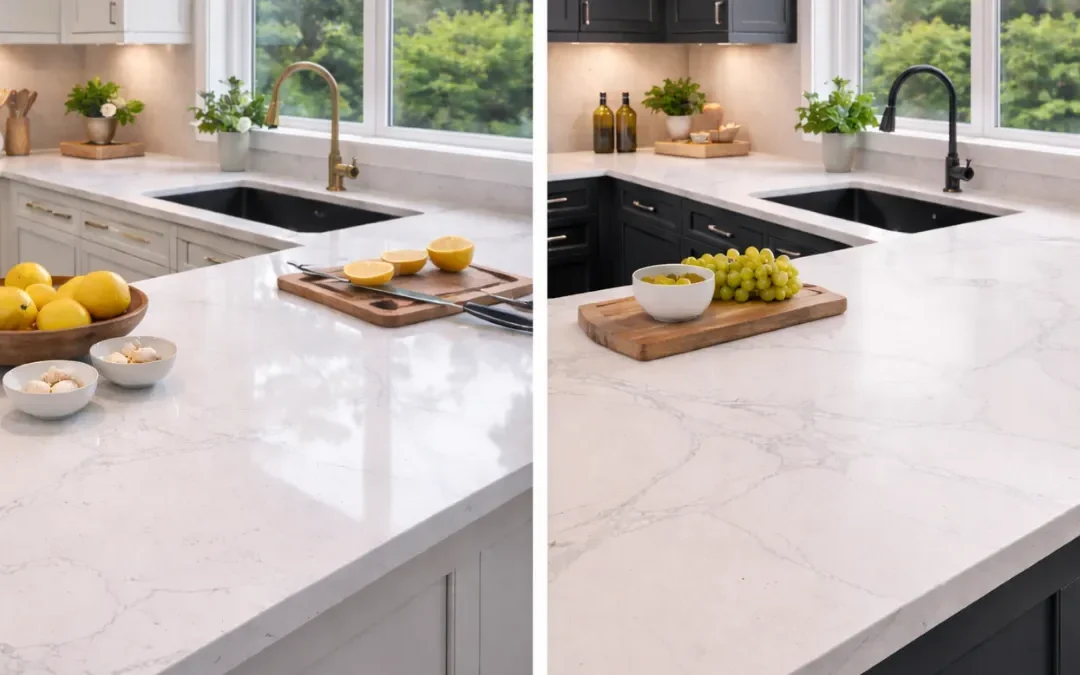
You’ve narrowed it down to two. Now the real question starts. Quartz and porcelain countertops are both beautiful, both durable, and both endlessly marketed as the “best” option. But they perform differently in real kitchens and real bathrooms, and the wrong choice can cost you more than money. Here’s the comparison you need before you decide.
What You’re Actually Choosing Between
Both quartz countertops and porcelain countertops are engineered materials, not natural stone. That matters because it means the quality, appearance, and performance you get are largely consistent across slabs. No worrying about the quarry yielding a weak batch.
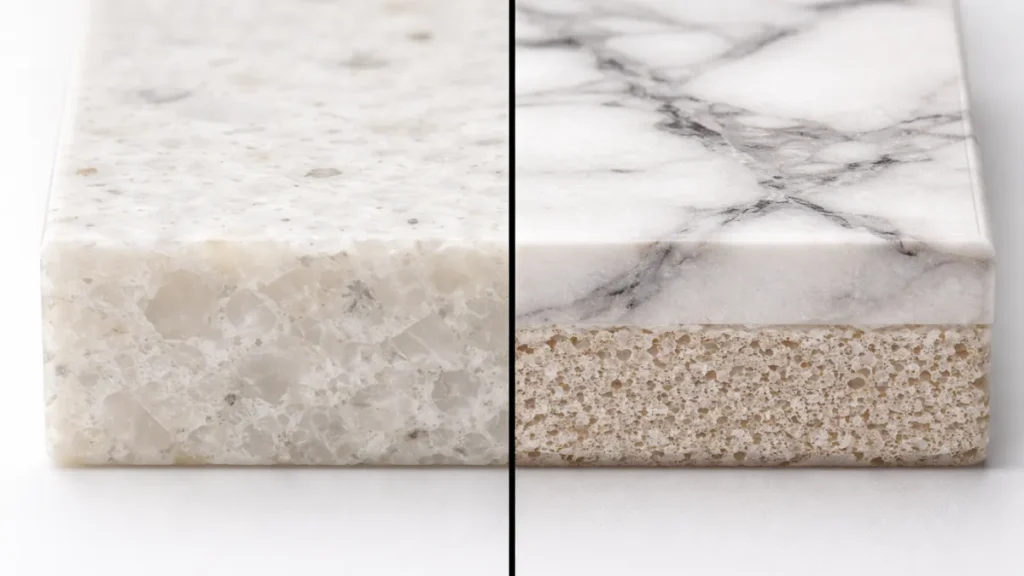
Quartz is made from roughly 90 to 93% ground quartz crystals bound together with resin and pigment. That resin is what gives quartz its slight give and its rich visual depth. When you look at a quartz slab, the color and pattern run all the way through the material.
Porcelain is a dense ceramic product, fired at extremely high temperatures (often above 2,200°F) from a mix of clay, feldspar, silica, and mineral oxides. It’s incredibly hard. But here’s the thing: most standard porcelain countertops use inkjet printing to apply their surface designs, which means the pattern sits on top, not throughout. If the surface chips, what’s underneath may look very different from what you chose.
That difference alone is worth keeping in mind as we go through the rest of the comparison.
Durability: Two Different Kinds of Tough
This is where the comparison gets nuanced. Both materials are hard. But they’re tough in different ways, and those differences show up exactly where you’d expect: in the kitchen.
Porcelain is extremely scratch-resistant. It rates around a Mohs 8 in hardness (matte finish), which is higher than quartz. You can drag most objects across a porcelain countertop and it won’t leave a mark. It’s also genuinely heat-resistant. You can set a hot pan directly on porcelain without damaging it, which is something quartz can’t claim. Quartz contains resin, and direct, sustained heat can cause discoloration or warping over time. Trivets aren’t optional with quartz. They’re a habit you’ll need to build.
Where porcelain gives up ground is in impact resistance. It’s hard, but it’s also brittle. Drop a heavy pot on a corner, and you may be looking at a chip that simply can’t be repaired. When porcelain breaks, it breaks with sharp edges, and because the design doesn’t run through the slab, a chip will look like a bare spot in whatever pattern you chose.
Quartz handles impact better. The resin in its composition absorbs a degree of force, making it less prone to chipping or cracking from everyday kitchen activity. And when quartz does get damaged, repairs are far more achievable since the material is consistent all the way through.
Bottom line on durability: If heat is your biggest concern, porcelain wins. If impact resistance and repairability matter more, quartz is the safer bet.
Maintenance, Looks, and Cost: The Day-to-Day Reality
Both quartz countertops and porcelain countertops are non-porous, which means neither requires sealing. That’s one of the reasons both have surged in popularity over granite and marble. Cleaning either one comes down to mild dish soap and a damp cloth. Neither will absorb stains from spills if you wipe them up reasonably quickly.
Where they differ is in cleaning flexibility. Porcelain is more tolerant of harsh chemicals, so if your countertop takes a beating from heavy-duty kitchen activity, you have more cleaning options. Quartz, because of its resin content, is better served by gentle cleaners. Abrasive cleaners or acidic solutions can dull the surface finish over time.
On aesthetics, quartz tends to offer more edge profile options including ogee, beveled, bullnose, and more, while porcelain is typically limited to mitered or square edges because its slabs are thinner. Quartz also tends to provide more visual depth in its patterning. Porcelain can replicate stone, wood, and even concrete beautifully, but because the design is surface-applied, it may show seams more visibly where cuts meet.
As for cost, porcelain countertops generally run between $55 and $120 per square foot installed, while quartz countertops range from roughly $45 to $200 per square foot depending on slab grade, color, and complexity. Quartz can actually be less expensive on smaller projects, but on large countertop runs, porcelain typically comes in lower. Porcelain installation also tends to cost more in labor because it’s more difficult to handle and requires specialized tools. Factor that in before assuming the lower material price makes it the budget option.
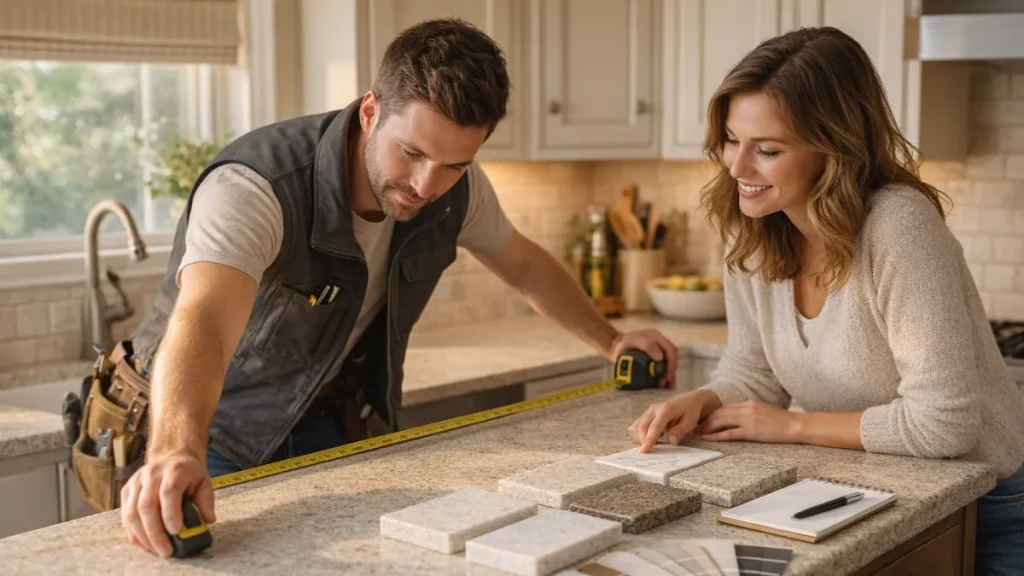
If you’re weighing which material fits your specific space and budget, schedule a free in-home estimate with an experienced countertop contractor before you commit to anything.
Which One Is Right for Your Kitchen or Bathroom?
There’s no universal answer here, which is frustrating, but it’s also true. The right choice depends on how you use your space and what you’re optimizing for.
Choose quartz countertops if:
- You want deeper visual richness and more edge design options
- Impact resistance and repairability matter more than heat tolerance
- You’re doing a kitchen remodeling or bathroom remodel and want a countertop with a strong ROI (quartz delivers a return of roughly 60 to 80 percent at resale)
- You prefer the look and feel of engineered stone that closely mirrors natural granite or marble
- You want a proven product with decades of track record in home renovations
Choose porcelain countertops if:
- Heat resistance is a top priority, and you cook with high heat regularly
- You want a countertop that can also work in an outdoor kitchen or covered patio
- You’re drawn to thinner, lighter slabs with a sleek, contemporary profile
- Eco-friendliness is a factor (porcelain contains no resins, so there are no VOC concerns)
- You’re open to spending more on installation in exchange for scratch resistance and heat performance
One thing worth noting: porcelain countertops, while practical and durable, have not been shown to add measurable resale value the way quartz does. If you’re remodeling with an eventual sale in mind, that’s a real consideration.
Making the Final Call
The quartz vs. porcelain countertops debate doesn’t have a wrong answer. It has the wrong answer for your kitchen. Quartz is the more forgiving, more versatile, and more resale-friendly option for most homeowners. Porcelain earns its place for the home cook who runs hot in every sense and wants a surface that keeps up without complaint.
What matters most is making the decision with accurate information, the right measurements, and a clear-eyed look at how your kitchen or bathroom actually gets used.
Planning to Replace Your Countertops?
If you’re already thinking about swapping out your countertops, now is the time to get a real number on it. Talk to an experienced contractor, see actual samples in your space, and know exactly what you’re working with before you commit to anything. A free estimate costs nothing and gets your project moving in the right direction.