
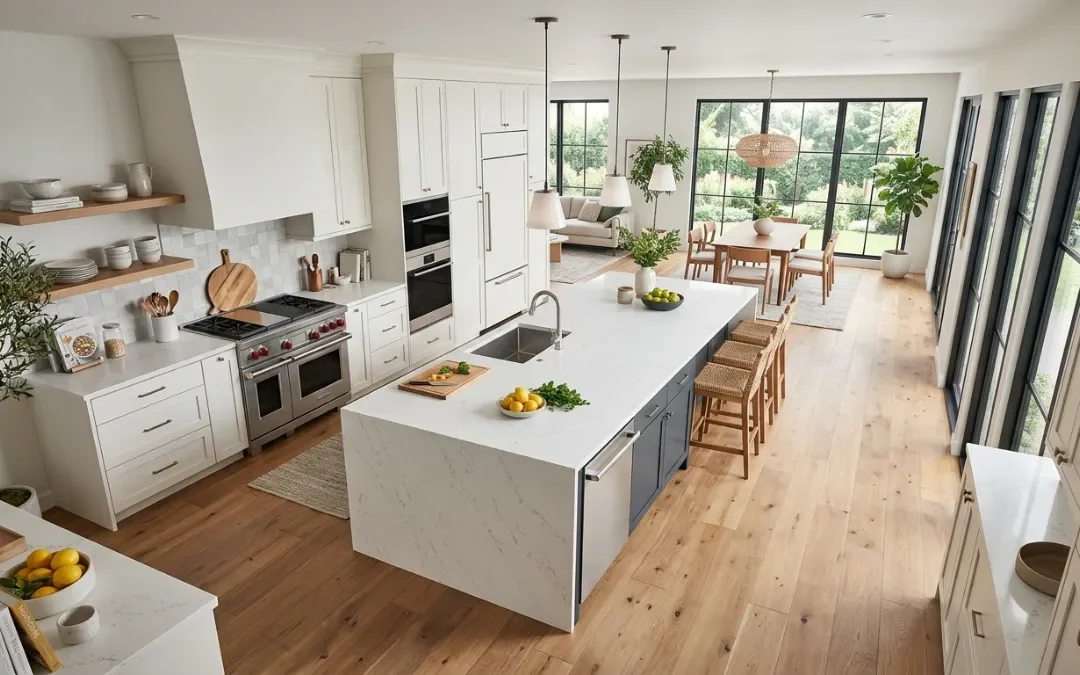
The kitchen is the most-used room in the house. It is where you cook, eat, entertain, help with homework, and somehow always end up gathering at parties, even when every other room is open. Getting the layout right is the single most important decision in any kitchen design or remodel, and it is the one decision that no beautiful tile or custom cabinetry can fix after the fact.
The good news is that choosing the right kitchen layout is not as complicated as it sounds. Once you understand how the main layout types work and what each one is designed to do, the right choice for your home usually becomes very clear.
This guide walks you through every major kitchen layout, what makes each one work, and how to figure out which one fits your space, your cooking habits, and the way you actually live.
The Kitchen Work Triangle
Before getting into specific layouts, it helps to understand the principle behind all of them: the kitchen work triangle.
The work triangle is the spatial relationship between your three most-used kitchen stations: the refrigerator, the sink, and the cooktop. When these three points are positioned efficiently, cooking feels natural and effortless. When they are not, no amount of beautiful design will make the kitchen feel good to work in.
The general guideline is that each side of the triangle should measure between 4 and 9 feet, and the total combined length should fall between 13 and 26 feet. Too cramped, and you feel like you are constantly bumping into things. Too spread out, and you are taking unnecessary steps every time you cook.
Modern kitchen design has expanded this concept into work zones for households with multiple cooks, adding dedicated prep zones, coffee stations, and baking areas. But the core idea stays the same: keep the things you use most within easy, logical reach of each other.
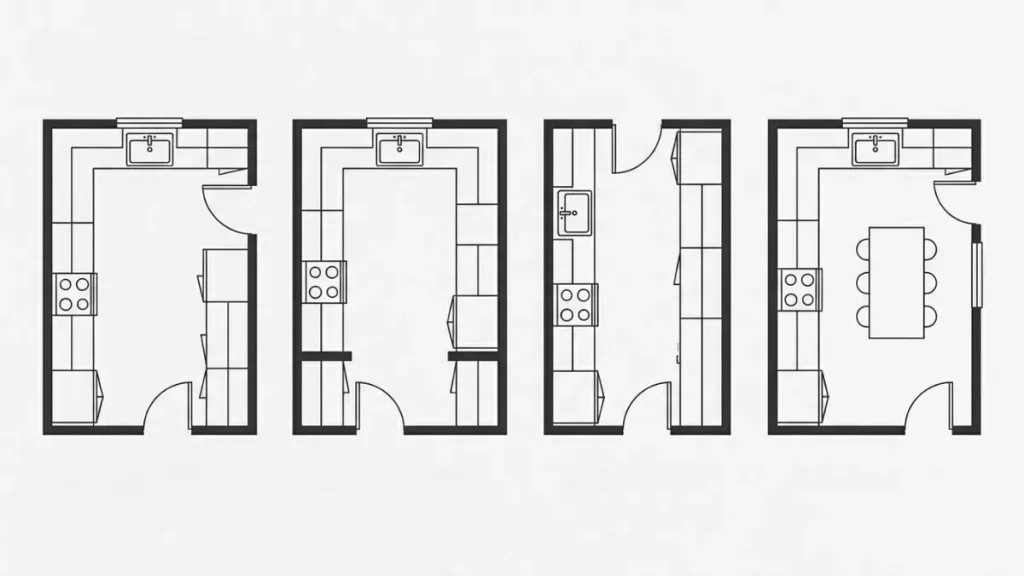
The 5 Main Kitchen Layout Types
The Galley Kitchen
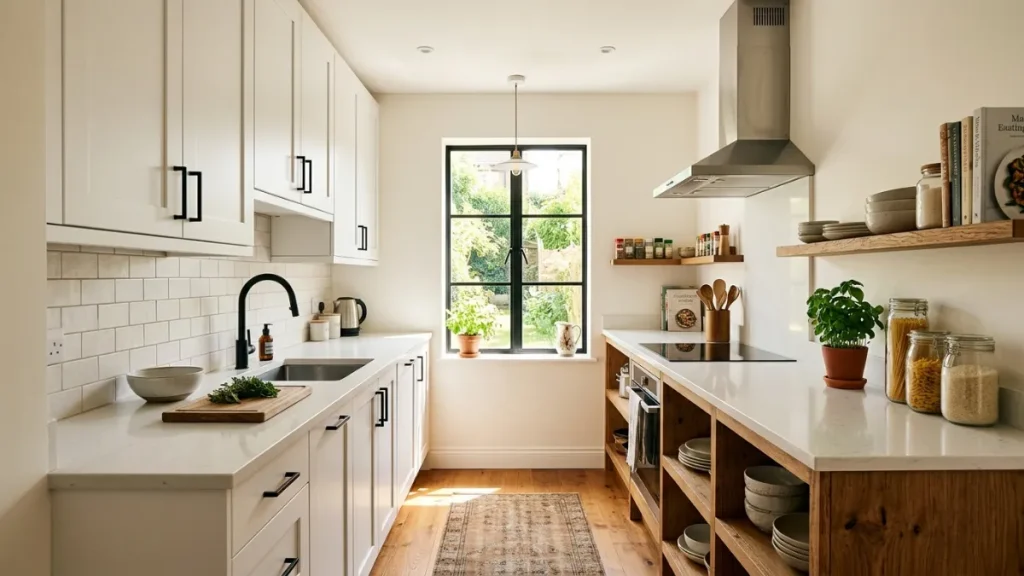
The galley kitchen is two parallel runs of cabinetry and countertop facing each other with a walkway in between. It is the most efficient layout in the world for a single cook, everything is within arm’s reach, and the work triangle is nearly perfect by design.
Galley kitchens work best in longer, narrower spaces and are common in apartments, older homes, and any room where a large footprint is not available. The minimum recommended clearance between the two runs is 42 inches for a single cook and 48 inches for households with two people regularly cooking at the same time.
The biggest challenge with galley kitchens is that they can feel closed off and tunnel-like. Removing the wall at one or both ends to open the space is one of the most popular galley kitchen renovations, and it makes a dramatic difference in both the feel and the function of the room.
The L-Shaped Kitchen
The L-shaped kitchen places cabinetry and countertop along two adjacent walls, forming an open corner. It is one of the most versatile layouts available because it works equally well in small spaces and large ones, and it naturally opens toward a dining area or living room in an open-plan home.
The L-shape creates a clean, efficient work triangle while leaving the center of the kitchen completely open. This makes it an excellent layout for families, for households that entertain regularly, and for anyone who wants to be part of what is happening in the adjacent room while they are cooking.
The corner where the two runways meet can be challenging to use effectively. Lazy Susans, pull-out corner drawers, and magic corner systems are all practical solutions that turn what is typically dead space into genuinely useful storage.
The U-Shaped Kitchen
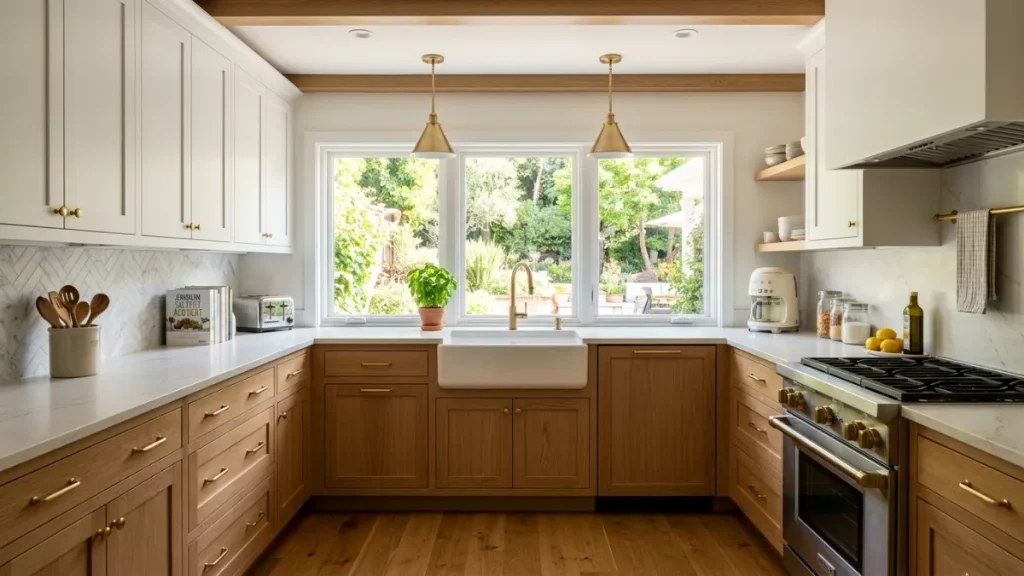
The U-shaped kitchen wraps cabinetry and countertop along three walls, creating an enclosed cooking space that maximizes storage and counter space more than any other layout. It is the layout of choice for serious home cooks who want dedicated zones for every task and as much prep surface as possible.
U-shaped kitchens work best in rooms that are at least 10 feet wide. In a narrower space, the layout can feel claustrophobic and make it difficult to have two people working comfortably at the same time. In a properly sized room, the U-shape is extraordinarily functional.
The trade-off is that the U-shape is the most enclosed of all the standard layouts. If an open, social kitchen is a priority, the U-shape may not be the right choice unless one end opens toward a dining area or the design incorporates a peninsula that creates a natural connection to the rest of the home.
The Island Kitchen
Technically more of an addition to an existing layout than a layout type on its own, the kitchen island has become the most requested feature in kitchen design for a very good reason. A well-designed island adds prep space, seating, storage, and a social hub that makes the kitchen feel like the true center of the home.
Islands work best when paired with an L-shaped or U-shaped base layout that already has strong perimeter counter space. The island then becomes the fifth station in the room: a place to prep, to set things down, to gather around, and often to eat casual meals without going to the formal dining table.
The most common island design mistake is making it too large for the room. As a general rule, you need a minimum of 42 to 48 inches of clear walkway on every side. If your kitchen cannot accommodate that, a rolling prep cart or a peninsula may serve you better than a fixed island.
The One-Wall Kitchen
The one-wall kitchen places everything, all cabinetry, countertop, appliances, and storage, along a single wall. It is typically found in studio apartments, open lofts, and very small homes where a multi-wall kitchen simply is not possible.
The challenge with one-wall kitchens is that the work triangle becomes a straight line rather than a true triangle, which means more walking back and forth. The solution is to be strategic about the placement of the sink, cooktop, and refrigerator: placing the cooktop in the center with the sink and refrigerator on either side creates the most efficient flow within the constraints of the layout.
A moveable island or a butcher block cart positioned in front of the one-wall kitchen adds prep space and storage without requiring any construction, and it can be moved aside when you need the floor space back.
How to Choose the Right Layout for Your Home
The right layout is never just about what looks best in a photo. It is about how you actually live.
Ask yourself these questions before committing to any layout:
How many people regularly cook at the same time? If you and a partner cook together every night, you need at least 48 inches of clearance in every work zone and ideally a layout with two distinct prep areas so you are not crossing paths constantly.
How important is staying connected to the rest of the home while cooking? If you want to be part of the living room conversation, watch the kids in the family room, or interact with guests while you cook, an open-plan layout with an L-shaped or island kitchen is going to serve you far better than a closed U-shape or galley.
How much storage do you actually need? If you own a lot of kitchen equipment, run a household that cooks frequently, or simply value the orderliness that comes with abundant storage, the U-shaped layout offers more cabinet and counter space than any other option.
What is the actual shape and size of your room? The best layout for a 10 x 14 foot kitchen is not the same as the best layout for a 15 x 20 foot open-plan space. Work with the room you have rather than trying to force a layout that is designed for different proportions.
Open-Concept vs. Closed Kitchens
Open-concept kitchens dominated residential design for the better part of two decades, and for many households, they are genuinely the right choice. The ability to cook while staying connected to family, guests, and the rest of the home is a real quality-of-life improvement that many homeowners deeply value.
But the fully open kitchen is not right for everyone. If you cook elaborate meals that generate a lot of smoke, steam, and splatter, a kitchen with at least partial separation from the living areas may actually serve you better. If you find open-concept spaces visually stressful because cooking mess is always on display, a more defined kitchen boundary gives you the ability to close the door and leave the chaos behind at the end of the day.
The best answer is not ideological. It is personal. Look at how your household actually functions, not at what the current design trend suggests you should want.
Your Layout Is the Foundation — Build It Right
Of all the decisions in a kitchen remodel or new build, the layout is the one that will affect you most directly and most consistently over the years. You interact with your kitchen layout every single time you open the refrigerator, rinse a dish, or stand at the stove. Get it right, and every other design decision falls into place naturally around it.
Take the time to think it through before anything else is decided. Walk through your current kitchen and notice what frustrates you. Talk to a kitchen designer or contractor who can look at your specific floor plan and offer a real-world perspective on what will work best.
The right layout for your home is out there. It just takes a little clarity to find it.
Of all the decisions in a kitchen remodel or new build, the layout is the one that will affect you most directly and most consistently over the years. You interact with your kitchen layout every single time you open the refrigerator, rinse a dish, or stand at the stove. Get it right, and every other design decision falls into place naturally around it.
Take the time to think it through before anything else is decided. Walk through your current kitchen and notice what frustrates you. Talk to a kitchen designer or contractor who can look at your specific floor plan and offer a real-world perspective on what will work best.
The right layout for your home is out there. It just takes a little clarity to find it.