
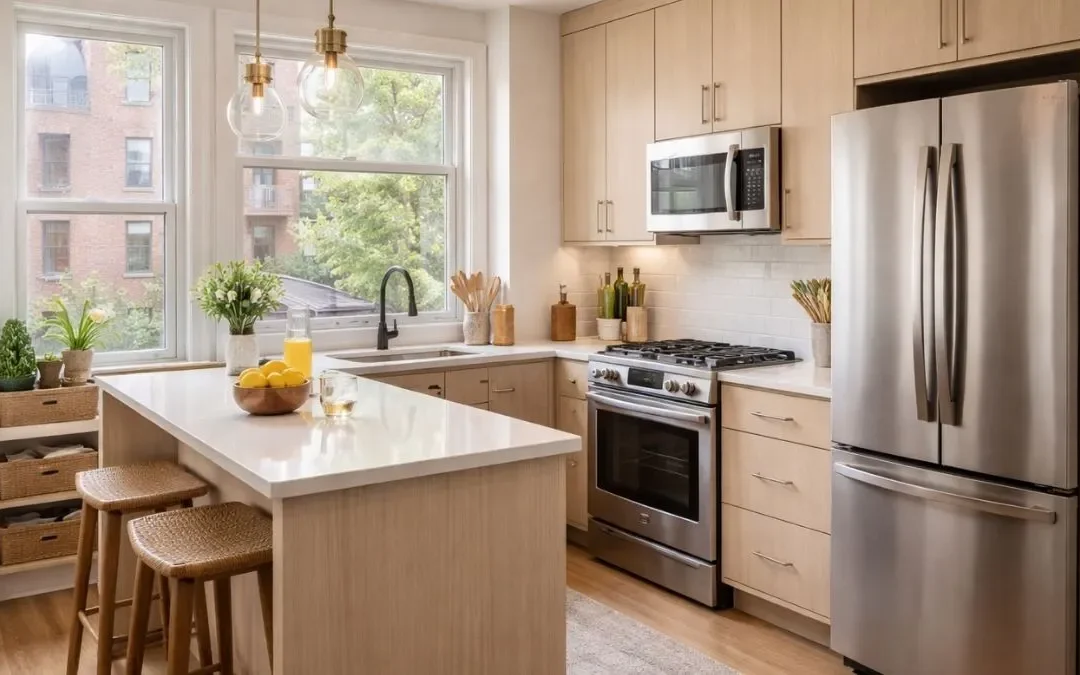
Small kitchens are common in many homes across Chicago, especially in condos, townhomes, and older properties. When planning a small kitchen remodel, homeowners often search for kitchen island ideas for small kitchens that improve function without overwhelming the space. A well-designed kitchen island can add prep space, storage, and efficiency even in compact layouts.
With thoughtful planning, a kitchen island can make a small kitchen feel more efficient and intentional. The right island layout improves workflow by keeping prep, cooking, and storage within easy reach. In compact Chicago kitchens, smart island design helps maximize function while maintaining comfortable movement throughout the space, even in homes with limited square footage.
Choose a Narrow or Mobile Kitchen Island
In small Chicago kitchens, oversized islands quickly disrupt movement and reduce usable space. Narrow kitchen islands are designed to maintain proper clearance while still offering valuable prep or serving areas. These slimmer profiles allow homeowners to gain extra counter space without compromising walkways, appliance access, or safety.
Mobile kitchen islands add another level of flexibility, which is especially useful in apartments or older homes with tight layouts. A rolling island can be repositioned during cooking, moved aside for gatherings, or stored when not in use. This adaptability allows the kitchen to serve multiple purposes throughout the day without feeling crowded.
These solutions work particularly well in condos and townhomes where space must be shared between cooking, dining, and entertaining. The ability to adjust or remove the island when needed helps the kitchen remain functional during busy mornings, holidays, or social gatherings. Over time, homeowners often find that flexibility matters more than size in a small kitchen remodel.
Use the Island for Storage First
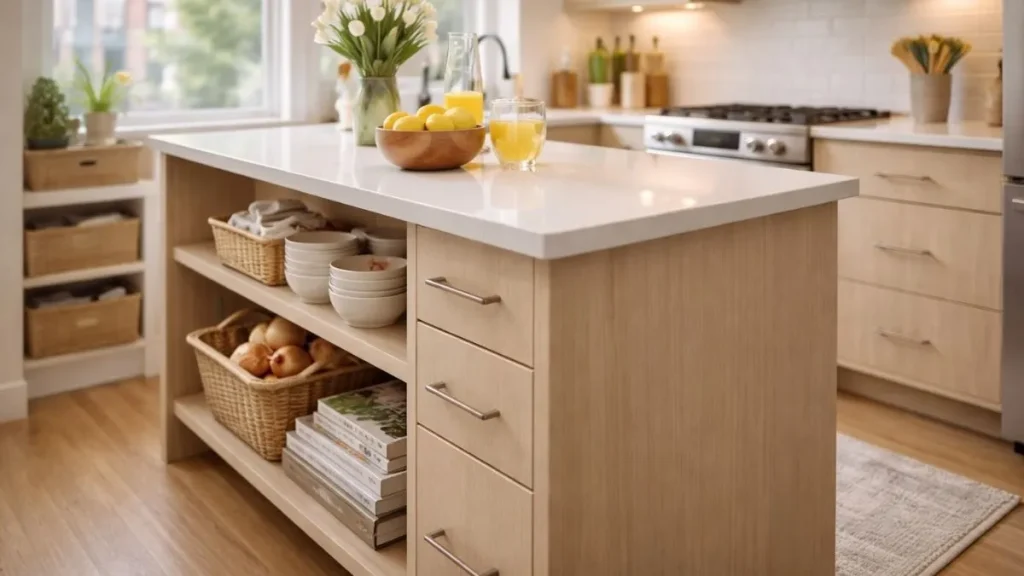
Storage is often the biggest challenge in small kitchens, which makes storage-focused island design essential. A kitchen island with built-in drawers, cabinets, or shelving can replace the need for additional wall cabinets that might otherwise close in the space. This approach keeps cookware, utensils, and pantry items within easy reach while preserving visual openness.
By concentrating storage in the island, homeowners can reduce clutter on surrounding countertops and walls. Deep drawers are especially effective for pots, pans, and small appliances, while lower cabinets can house recycling bins or pull-out organizers. These features improve daily efficiency and make the kitchen easier to keep tidy.
Open shelving on one side of the island can also help balance storage with visual openness. Shelves facing the dining or living area keep the island from feeling bulky and allow for decorative items or frequently used dishes. When designed thoughtfully, storage-focused islands improve organization without making the kitchen feel closed in or heavy.
Consider Seating Only When Space Allows
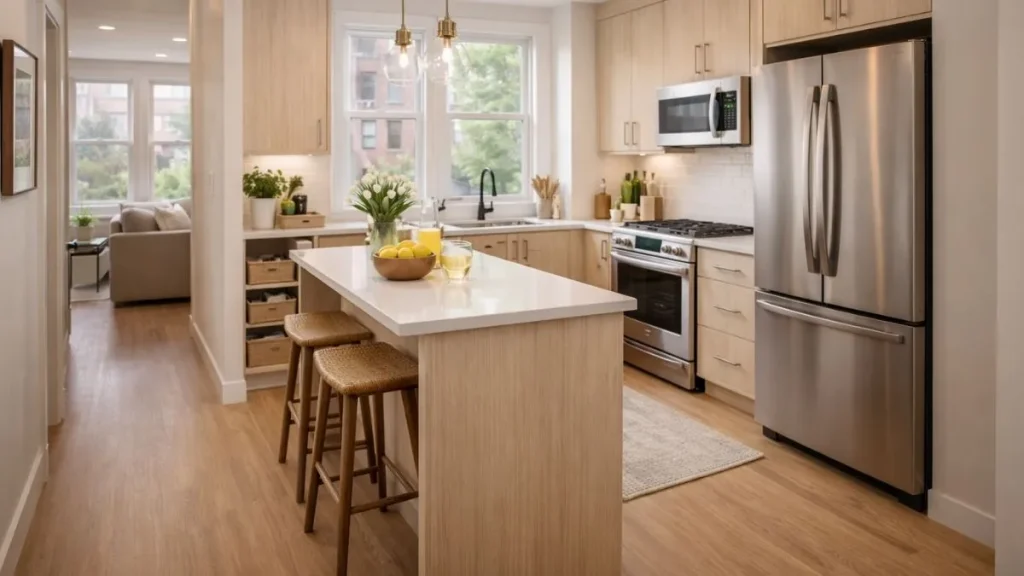
While seating is appealing, not every small kitchen layout can support it comfortably. In tighter kitchens, a slim island overhang for one or two stools is often more practical than full-depth seating. This setup allows for quick meals or casual seating without interfering with primary work zones.
Seating should never compromise walkways, appliance clearance, or safety. In many small kitchens, homeowners discover that forcing seating into the layout leads to congestion, especially during cooking. Choosing a smaller seating area or skipping seating altogether often results in a more comfortable and functional space.
Prioritizing movement over seating usually leads to better long-term satisfaction. Homeowners who focus on daily usability tend to enjoy their kitchens more, even if it means using a nearby dining area for meals. In Chicago homes where square footage is limited, thoughtful compromises often deliver the best results.
Light Colors and Clean Lines Matter
Light finishes and clean cabinet lines play a major role in how a small kitchen feels. Kitchen islands finished in lighter colors reflect more light and visually expand the space. This is especially helpful in Chicago homes where natural light may be limited by surrounding buildings or smaller windows.
Simple cabinet profiles and minimal hardware reduce visual clutter and help the island blend seamlessly with the rest of the kitchen. Flat-panel or shaker-style cabinets with subtle hardware tend to work best in compact layouts. When the island matches or complements existing cabinetry, the entire kitchen feels more cohesive and balanced.
Avoiding overly decorative details keeps the focus on function rather than bulk. Clean lines allow the island to feel like part of the kitchen rather than a separate, oversized element. Over time, this design approach helps small kitchens remain timeless and adaptable to future updates.
Plan the Island Around Workflow, Not Trends
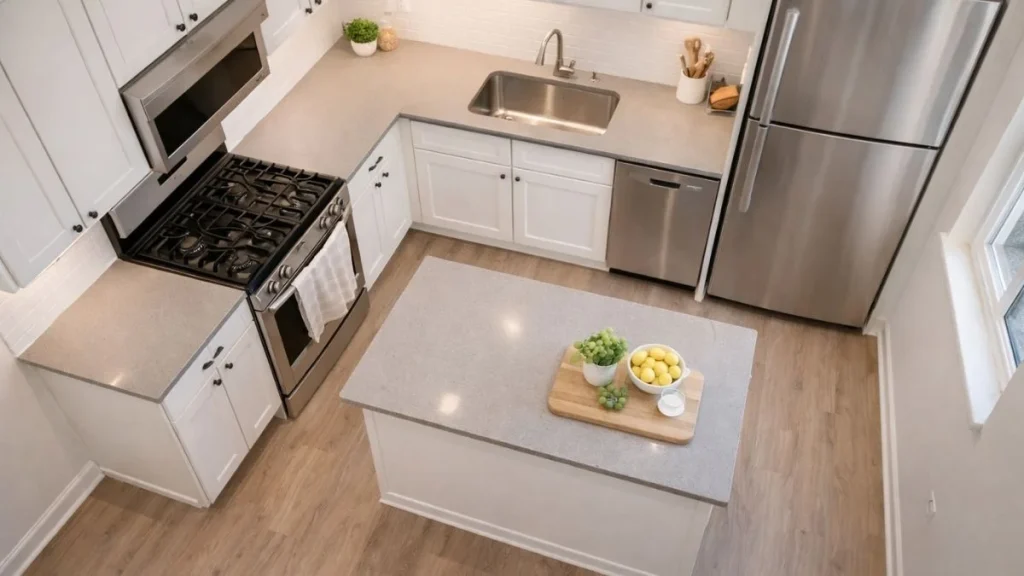
Trendy kitchen islands often look great in photos but fail in daily use, especially in small kitchens. Workflow should always take priority over aesthetics. The island should support prep, cooking, and cleanup without interrupting natural movement patterns.
Clearances between the island, appliances, and walls are critical. A few extra inches can make the difference between a kitchen that feels cramped and one that works smoothly. Professional layout planning helps ensure that every inch of space is used effectively.
Designing the island around workflow rather than trends results in a kitchen that functions well long after styles change. This approach is especially valuable in Chicago homes where remodels are often long-term investments.
Planning Your Small Kitchen Island Layout
For homeowners planning a small kitchen remodel in Chicago, choosing the right island design often comes down to expert layout planning. Proper measurements, traffic flow analysis, and storage planning are essential to avoid costly mistakes. Even small adjustments in island size or placement can dramatically improve usability.
Working with an experienced remodeling contractor helps ensure the island fits both the space and the homeowner’s lifestyle. Budget Construction Company assists homeowners with layout planning, material selection, and realistic timelines tailored to small kitchens.
A free kitchen remodeling estimate can also help clarify costs and expectations before construction begins.